Worried About Tree Stress in Omaha? Here’s What It Looks Like
What do humans and trees have in common? More than you might think. We both rely on water and nutrients, and we both need ways to stay cool. Trees function a lot like we do.
And there’s one big thing we both need to avoid: stressed trees.
We all know how stress affects the human body over time—fatigue, headaches, trouble sleeping, and a weakened immune system. Trees deal with stress too. When stress builds up, it makes trees more vulnerable to pests, disease, and long-term decline.
Many factors can stress trees, especially in urban and residential environments. Here are some of the most common stressors:
Air Pollution
Dust and particulates can block leaf pores and reduce photosynthesis. Trees also “sweat” through a process called transpiration, which helps them cool down. When particulates clog leaf surfaces, trees can overheat.
Ozone and acid rain can damage bark and disrupt soil pH. Stressed trees may also release volatile carbon compounds, which can contribute to air pollution.
Excessive Pruning
Over-pruning triggers stress quickly. It creates several problems at once:
-
Removing too many limbs creates large wounds
-
Removing too many leaves cuts off the tree’s energy supply
-
Sudden sun exposure can damage bark and tissue
Poor Soil Conditions
Construction, vehicles, and heavy foot traffic compact soil and limit oxygen access for tree roots. Compacted soil also reduces nutrient absorption. Poor-quality topsoil (common in new housing developments) can also stress trees over time.
Healthy soil matters—and compost helps.
Temperature Stress
Cities and developed neighborhoods create “heat islands.” Concrete and metal absorb and hold heat differently than turf. That extra heat raises temperatures and increases tree stress, especially in summer.
Light Pollution
Trees rely on natural light cycles. Constant artificial light can disrupt growth patterns and seasonal responses. Imagine trying to sleep with the lights on every night.
Storm Damage
Storms can break branches, tear bark, and expose trees to decay. You can’t prevent storms, but you can protect your tree after damage. Clean, correct pruning cuts help the tree heal and reduce the risk of rot.
Moisture Problems (Too Much or Too Little)
Water stress causes major problems for trees. Trees consist of about 75% water, and leaves can reach up to 99% water.
Trees need water to move nutrients from the roots to the canopy. During peak spring growth, a mature red oak can use 100–200 gallons of water per day.
More resources on watering trees:
University of Nebraska Extension: https://nfs.unl.edu/when-water-trees/
University of Nebraska Extension: https://lancaster.unl.edu/5-common-questions-about-trees-drought-and-fall-watering/
Missing Essential Nutrients
Trees need a healthy balance of essential elements like:
-
Carbon dioxide (CO₂)
-
Water (H₂O)
-
Nitrogen (N)
-
Phosphorus (P)
-
Potassium (K)
Soil pH plays a major role in nutrient availability. A professional soil test can identify issues before symptoms become severe.
What Do Stressed Tress Look Like?
Not sure if your tree is struggling? Watch for these common symptoms:
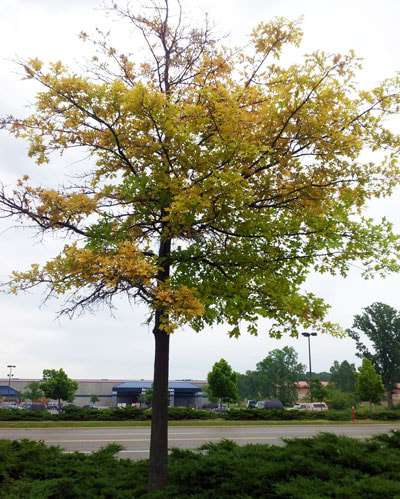
Canopy Dieback
You may notice delayed spring leaf-out or early leaf drop in fall in stressed trees. Compare the top of your tree to nearby trees of the same species. A stressed tree often shows:
-
thinner canopy coverage
-
smaller leaves
-
pale or discolored foliage
Water Sprouts
New shoots that grow from the trunk or major limbs often signal stress. These sprouts tend to grow weakly and can create structural problems over time.
Wilting Leaves
Leaves stay firm and healthy through turgor pressure, which depends on hydration. When moisture levels drop, leaves wilt, curl, or lose their shape.
Early Fall Color
If your tree turns color too early, stress often drives the change. Nutrient issues—like poor iron or manganese uptake—can also trigger early fall color.
What Can You Do About Stressed Tress?
The good news: many causes of stressed tress can be reduced or corrected with the right care.
Right Tree, Right Place
Choose trees that are well-suited for your region and your property conditions. Proper placement matters too—trees need:
- enough room to grow
- adequate sunlight
- access to moisture
- minimal soil compaction near the root zone
Water the Right Way (Even in Winter)
Winter watering is often overlooked. During dry spells, wait for a warm day and give your tree a deep soak when you can safely use the hose.
Avoid Soil Compaction
Compacted soil reduces oxygen and water availability to roots. Protect your tree by:
- limiting traffic near the trunk
- avoiding heavy equipment inside the drip line
- keeping root zones protected during construction projects
Prune Conservatively
A good rule of thumb: never remove more than 1/3 of a tree’s biomass in one season—and even less is often better. Over-pruning forces the tree into survival mode.
A Certified Arborist can prune for structure and health without triggering unnecessary stressed tress.
What Can You Do About Stressed Trees?
The right care can reduce stress and help trees recover.
Right Tree, Right Place
Choose trees that match your region and your property conditions. Location matters too. Trees need:
-
enough room to grow
-
adequate sunlight
-
access to moisture
-
minimal soil compaction near the root zone
Water the Right Way (Even in Winter)
Many homeowners skip winter watering. During dry spells, pick a warm day, hook up the hose safely, and give your tree a deep soak.
Avoid Soil Compaction
Compacted soil limits oxygen and water for roots. Protect your tree by:
-
limiting traffic near the trunk
-
keeping heavy equipment outside the drip line
-
protecting root zones during construction projects
Prune Conservatively
Never remove more than 1/3 of a tree’s canopy in one season—and less often works better. Heavy pruning forces the tree into survival mode.
A Certified Arborist can prune for structure and health without pushing the tree into unnecessary stress.
Add Your Heading Text Here
Concerned Your Tree Is Stressed?
If you see signs of stress, get expert input early. Our Certified Arborists can recommend solutions that support:
- healthy root growth
- improved nutrient absorption
- long-term canopy health
FREE CONSULTATION
Contact us today to schedule your free tree health evaluation.