Fall Webworm on Honeylocust & Mimosa: Signs, Treatment & Prevention
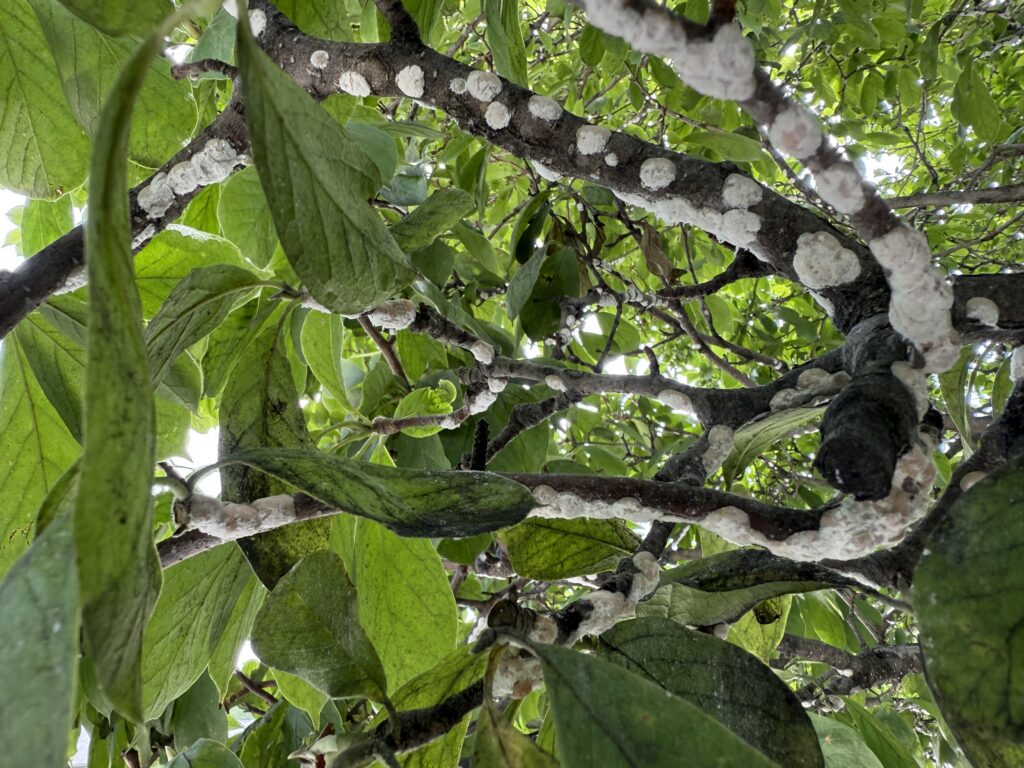
Fall webworm are web-building caterpillars that infest honeylocust and mimosa trees. If you’re seeing brown clusters of leaves covered in webs, and even worms coming down from the tree on strands of silk, you’re seeing the season’s first generation of caterpillars.
We recommend spraying NOW to address the second (often larger) generation of caterpillars that will feed into September and cause significant damage.
What trees are at risk?
Honeylocust and mimosa (the tree, not the drink).
How is it treated?
We apply an insecticidal foliar spray to the canopy of the tree at high pressure to penetrate the webs.
How can I prevent this next year?
Next year, we recommend a two-spray series: first in June to address the first generation, and second in August to address the second generation. The first spray in June is most effective, since it is applied before the webs are formed, and will also help significantly reduce the population of the second generation.
We recommend spraying NOW to address the second (often larger) generation of caterpillars that will feed into September and cause significant damage.
What trees are at risk?
Honeylocust and mimosa (the tree, not the drink).
How is it treated?
We apply an insecticidal foliar spray to the canopy of the tree at high pressure to penetrate the webs.
How can I prevent this next year?
Next year, we recommend a two-spray series: first in June to address the first generation, and second in August to address the second generation. The first spray in June is most effective, since it is applied before the webs are formed, and will also help significantly reduce the population of the second generation.