Spruce and Pine Diseases
It isn’t easy being a spruce or pine tree here on the plains of eastern Nebraska. These evergreens face constant pressure from a wide variety of insects and fungal diseases, including common spruce and pine disease issues that thrive in our climate. These pests and pathogens can weaken tree structure, reduce vigor, and greatly impact overall appearance. Because spruce and pine disease problems spread quickly, proactive care is essential. Regular monitoring and preventative treatments help protect your trees from these threats and support long-term health and resilience.

Spruce Trees
Spruce trees in eastern Nebraska, especially blue spruce varieties, face multiple insect and disease issues that impact their health and appearance. To keep your evergreens looking their best, an annual preventative spray program is recommended to protect them from these common threats.
- Rhizosphaera needle cast: affects Colorado blue spruce, white spruce, and occasionally Norway spruce. It “is a fungal disease of spruce trees that causes needles to turn brown and fall off”[i].
- Spider mites: these mites prefer spruces, but will eat a wide variety of evergreens. “It is native to North America and is one of the most destructive spider mites in the US”[ii].
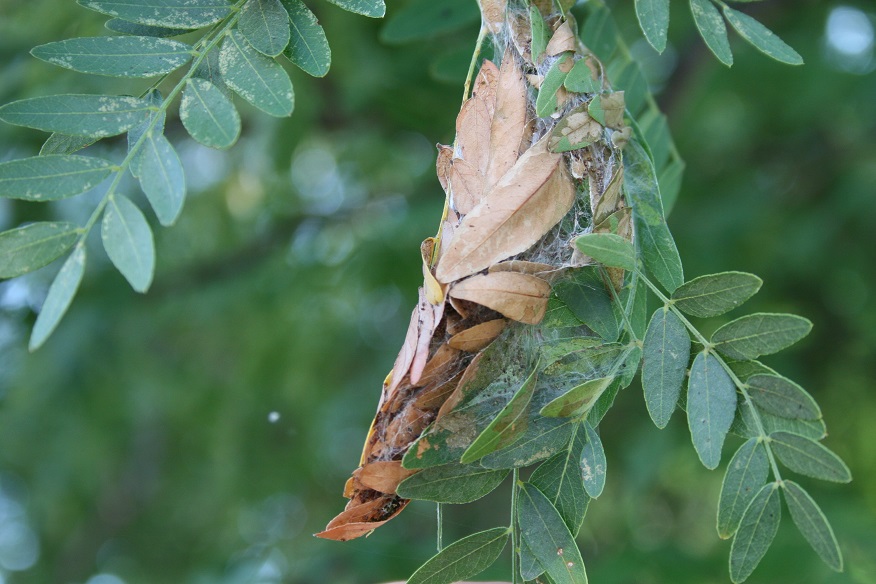
- Bagworms: “A severe infestation of bagworm may defoliate plants, which can kill branches or entire plants”[iii]
[i] https://extension.umn.edu/plant-diseases/rhizosphaera-needle-cast
[ii] https://www.missouribotanicalgarden.org/gardens-gardening/your-garden/help-for-the-home-gardener/advice-tips-resources/insects-pests-and-problems/insects/mites/spruce-spider-mite
[iii] https://mortonarb.org/plant-and-protect/tree-plant-care/plant-care-resources/bagworms/
Pine Trees
Our non-native pines are highly susceptible to two major needle diseases that can weaken tree health and reduce overall vigor. These fungal pathogens spread quickly, leading to premature needle drop and long-term decline if they are not properly managed. Applying a series of targeted foliar sprays at the correct intervals can prevent infection or control existing disease, helping protect the vitality and appearance of your pine trees.
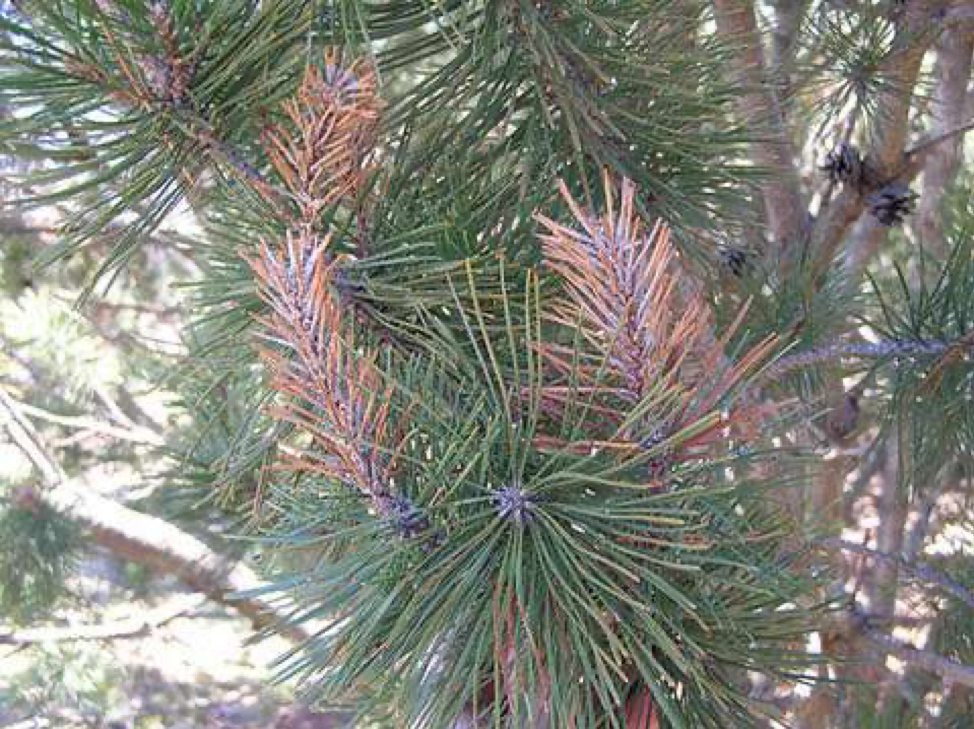
- Dothistroma needle blight: Incredibly common on Austrian, Ponderosa, and mugo pines. The “older, inner needles are affected first causing premature needle drop”[i]. Left untreated, Dothistroma needle blight could kill the tree.
- Diplodia tip blight: Most common in two- to- three- needle pines like Austrian and Scotch pines that are stressed. “The disease typically appears on trees as they reach conebearing age, with trees 20-30 years old being especially hard hit”[ii] It affects the new shoots as they emerge in spring. Because the trees drop old needles, and this disease inhibits new needles from growing, a heavy infestation can cause the death of these pines.
[i] https://lancaster.unl.edu/controlling-dothistroma-needle-blight/
[ii] https://www.extension.purdue.edu/extmedia/BP/BP-24-W.pdf