Mimosa Webworm
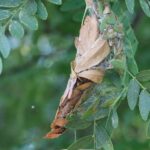
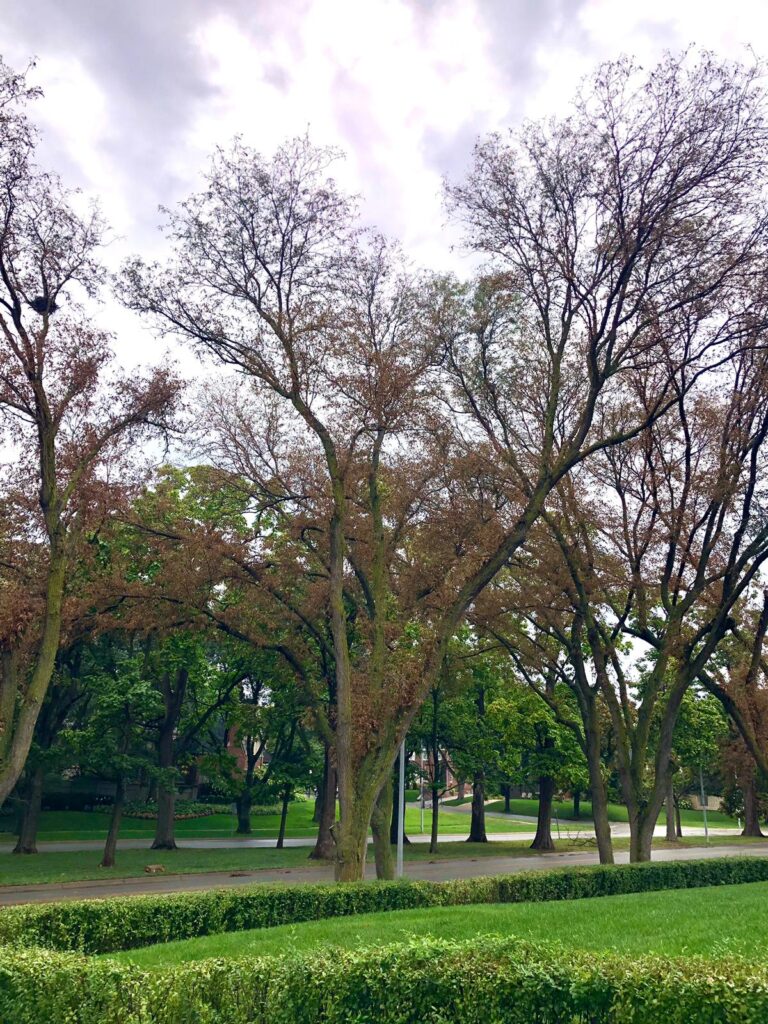
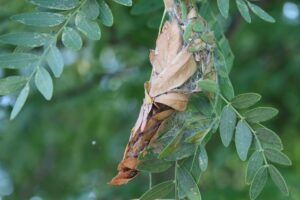
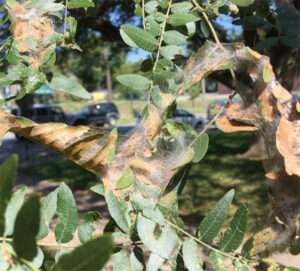
If you notice browning clusters of leaves on your honeylocust or mimosa trees wrapped in messy webs, you may have mimosa webworm. These web-building caterpillars feed on foliage inside protected webbing, which helps them continue damaging the canopy while staying sheltered from predators and weather. At first, you may only spot a few small webbed areas. However, as the infestation grows, browning spreads throughout the tree and clusters of leaves begin to stick together in dense, messy patches. By late summer, this damage can make a tree look scorched, thin, and unhealthy from midsummer through fall.
In Omaha, we’ve also started seeing a shift in the seasonal cycle. Instead of two generations, we now often see three generations in a single season. As a result, the late-season activity pushes feeding later into the year and adds extra stress to the tree when it already faces heat and drought conditions. In turn, this extended pressure can increase damage, reduce the tree’s visual appeal, and make control more challenging if treatments start too late. For the best results, we focus on early intervention and well-timed follow-up treatments to keep populations down throughout the season.
What Trees are most at Risk
How is Mimosa Webworm Treated?
To control mimosa webworm, we apply an insecticidal foliar spray to the canopy at high pressure. This direct approach helps the treatment push through protective webbing and reach caterpillars feeding inside the canopy, where they cause most of the visible damage.
However, one spray rarely solves the problem for the entire season. Because the pest can produce multiple generations each year, new caterpillars can emerge later and restart feeding—even after the first treatment reduces activity. As a result, we often recommend more than one application to keep populations down and protect canopy health through mid-to-late summer.
For larger trees, or when site conditions make canopy coverage more difficult, we also offer systemic treatment options such as soil-based applications or injections. These treatments support longer-term suppression and can provide a practical alternative when foliar spraying isn’t possible or doesn’t deliver consistent results.
What Should I Expect?
Tree care doesn’t follow a perfect formula, especially when mimosa webworm produces multiple generations in the same season. Treatments reduce mimosa webworm populations and slow feeding damage, but the next generation can still emerge weeks later and restart activity in the canopy. Even when the first treatment works well, the tree may still show new browning as fresh caterpillars appear and begin webbing again.
That’s why results often depend on timing, weather, and overall infestation pressure. When mimosa webworm stays active longer than expected—or when a third generation shows up late in the summer—the tree can take on a scorched or thin appearance before it has time to recover.
Our team focuses on proactive, season-long control. We monitor mimosa webworm activity, target each generation at the right time, and adjust the plan when pressure stays high. By staying ahead of the next hatch, we help limit repeat damage and keep your tree healthier and better-looking throughout the growing season.
What Can I Do to Avoid Repeat Damage?
To limit damage the following season, we recommend a proactive two- or three-spray program based on seasonal conditions, tree size, and pressure levels. Because this pest can develop in multiple generations—and those generations can overlap—early intervention gives you the best opportunity to reduce feeding before webbing becomes dense and damage spreads through the canopy.
Here is the prevention schedule we most often recommend:
- First spray in June: Targets the first generation before webs fully form and caterpillars gain protection inside the webbing. This timing helps you stay ahead of early feeding and reduces the population that would otherwise fuel later generations.
- Second spray in July/August: Suppresses the larger mid-season generation, which often causes the most noticeable canopy browning and a “scorched” appearance.[i]
- Third spray (as needed) in late August/September: Targets late-season activity when pressure continues later than usual. In some seasons, a third generation can emerge or overlap, which extends damage deeper into late summer and early fall.
Ultimately, consistent treatment timing matters just as much as the product itself. When you start early and follow up at the right intervals, you give your honeylocust or mimosa tree the best chance to stay healthy, vibrant, and visually appealing throughout the entire season. Schedule a consultation with one of our Certified Arborists to build a plan tailored to your trees and your property.[ii]
[i] https://www.extension.entm.purdue.edu/publications/E-11/E-11.html?
[ii] https://www.umass.edu/agriculture-food-environment/landscape/fact-sheets/mimosa-webworm