Why a Flush Cut Is Harmful to Tree Health
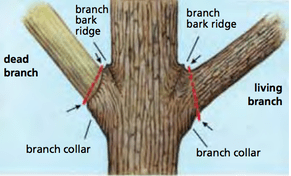
Tree trimming is an essential part of proper tree care in urban environments, and avoiding a flush cut is critical to long-term tree health. Limbs often need to be removed to maintain clearance over streets and sidewalks, protect roofs and gutters, or improve access and safety within a yard. “When pruning a tree, remove thick, heavy branches flush with the collar at the base of the branch rather than flush with the trunk”(1). While removing branches may appear simple, improper pruning techniques can cause long-term damage.
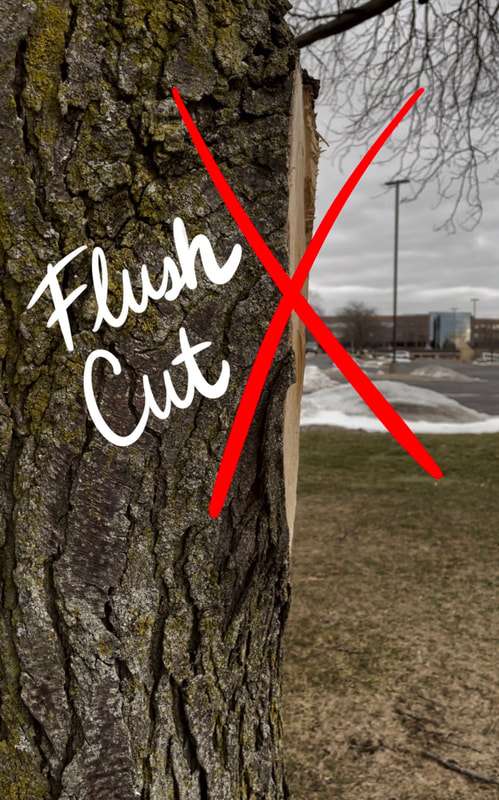
One common mistake is making a flush cut. A flush cut removes a limb completely level with the trunk in an attempt to make it look as though the branch never existed. Although this approach may seem cleaner, a flush cut is an improper pruning method that can seriously harm a tree.
1-https://extension.oregonstate.edu/sites/extd8/files/documents/12281/pruningtreesshrubs.pdf
How Trees Respond to a Flush Cut
Trees have a natural defense system known as Compartmentalization of Decay in Trees, or CODIT. Through this process, a tree isolates damaged tissue by forming barriers that limit the spread of decay vertically, radially, and tangentially. When damage occurs naturally, the tree activates this defense system to prevent decay-causing fungi from spreading.
Pruning wounds trigger the same response. However, when a flush cut removes critical protective tissue, the tree loses its ability to compartmentalize decay effectively. This significantly increases the risk of internal rot, structural weakness, and long-term decline.
The Importance of the Branch Collar
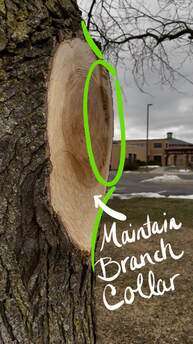
Proper pruning preserves the branch collar, which is the swollen area of tissue where a branch meets the trunk. Maintaining the branch collar allows the tree to form a strong callus over the wound, sealing it naturally and efficiently.
A flush cut removes the branch collar entirely. Without this protective tissue, the tree cannot close the wound properly, leaving exposed wood vulnerable to decay organisms. The branch bark ridge and collar are not always easy to identify, especially on mature trees, which is why trained arborists take a cautious approach.
When the branch collar is unclear, best practice is to cut slightly away from the trunk. Leaving a small stub is far less damaging than making a flush cut that compromises the tree’s natural defense system.
How Flush Cuts Affect Wound Shape and Healing
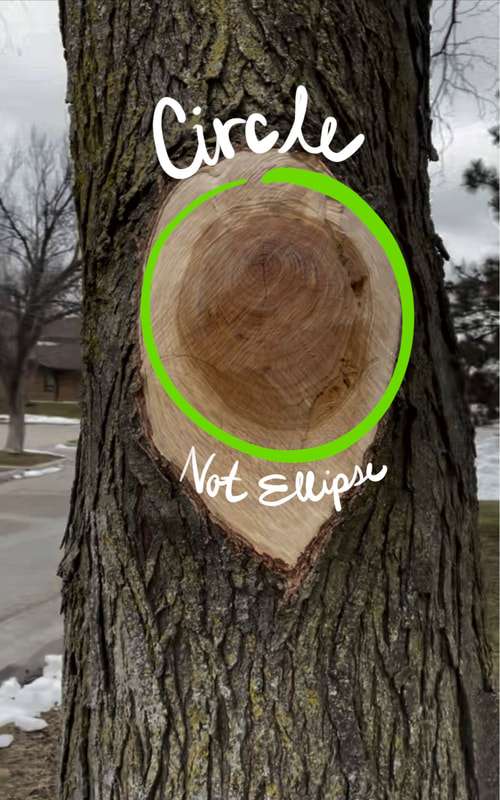
In most cases, a proper pruning cut results in a circular or near-circular wound. This shape allows the tree to seal the wound evenly as new tissue forms around the cut.
A flush cut, however, creates an elongated or vertical elliptical wound because the cut runs parallel to the trunk instead of perpendicular to the branch. This shape indicates that the branch collar has been removed, making proper wound closure difficult or impossible. Over time, this increases the likelihood of decay spreading into the trunk.
When to Consult a Certified Arborist
If you are unsure where to make a proper pruning cut, consulting a certified arborist is always the safest option. Arborists understand tree biology, recognize branch collars, and know how to avoid flush cuts that compromise tree health.
Improper pruning can have lasting consequences, so professional guidance is especially important for larger limbs or valuable landscape trees. For homeowners interested in learning more, you can also review our previous post on DIY pruning best practices.